No change to the policy rate and reflections on the IMF Global Meetings
30 October 2026
Blog
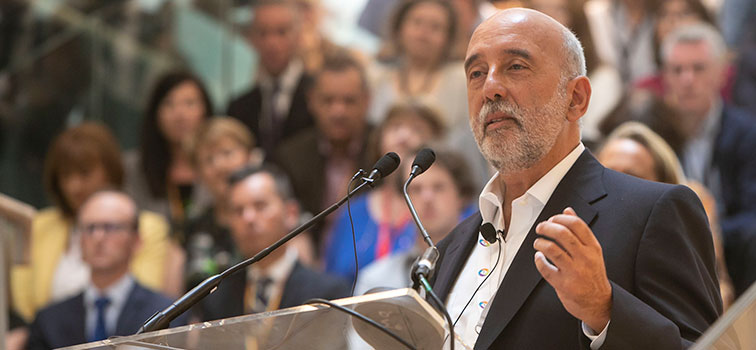 As is typically the case in the Autumn, this week’s Governing Council meeting was preceded by the IMF Annual Meeting in Bangkok, Thailand. The meetings cover overlapping themes, and, in addition to my regular post-Governing Council blog, I reflect on some of the key issues discussed at the IMF.
Before turning to this week’s decision, a word about Christine Lagarde, who has announced her intention to step down as ECB President in February. Christine has been a friend to Ireland for well over a decade. At the ECB, she steered policy through a pandemic, the sharpest inflation surge in a generation and now a second energy shock, while building consensus across a Governing Council of often differing views. She is a great leader, and it has been a privilege to work with her (and to continue to do so for a few more months!)
No change to the policy rate
This week my ECB Governing Council colleagues and I decided to leave interest rates unchanged. The Deposit Facility Rate, through which we steer the monetary policy stance, remains at 2.5 per cent, following increases in both June and September.
The decision, which I supported, does not signal that we have finished, nor that we are about to move again. Our approach remains data-dependent and meeting-by-meeting, with no pre-commitment to a particular rate path.
What has changed since September
Recent energy outturns have been worse than expected. Oil and gas prices have risen again, marking a new wave of the energy shock. As a result, recent headline inflation was a little higher than previously expected: euro area inflation was 3.8 per cent in September, the highest since 2023, while core inflation edged up to 2.5 per cent.
I am uncomfortable that inflation is where it is. Upside risks remain, and we must stay vigilant and monitor developments very closely.
The economy has proved resilient, in part due to increases in Government spending in some countries and the investment impulse from AI-related infrastructure spending. In terms of the demand impulses that might give rise to persistent inflation, there are decidedly mixed signals. In this sense, the way this shock is propagating differs in important respects from 2022. The broadening of price pressures has, for now, remained largely confined to the energy basket. Refining margins and diesel prices are examples. As Christine Lagarde mentioned after our September meeting, so-called crack-spreads – the price difference between a barrel of crude oil and the refined petroleum products produced from it – are closely monitored.
Indirect effects on other goods and services are present, but they are not intensifying. And we are not seeing second-round effects: wage growth remains contained. In financial markets, longer-term inflation expectations are anchored. For consumers, expectations also remain well-anchored, but we are seeing increased attention to inflation and medium to longer-term inflation expectations warrant monitoring, especially in the context of future wage negotiations, both in Ireland and across the euro area as a whole.
Three considerations shaped my view on yesterday’s decision
As I mentioned above, I supported the decision to leave interest rates unchanged. But I did also seriously consider the case for an increase. There were three factors that shaped my view on yesterday’s decision.
First, the 50 basis points of tightening we have delivered since June are still working their way through the economy. Monetary policy acts with lags, and it will take time to judge its full effect.
Second, financing conditions have tightened since September as long-term bond yields have risen, in the euro area and globally. There are several reasons for this, including a combination of higher expected growth and real rates, but also more inflation compensation. Understanding the balance between the two matters for the euro area, because they carry different implications for the outlook. On balance, though, I expect the tightening in financing conditions to dampen demand and inflationary pressures somewhat.
Third, these forces pull in different directions. Energy is pushing inflation up; tighter financing conditions push the other way. The full projection round in December will help to assess the relative impact on the outlook. As I noted in September, raising rates a great deal more could carry costs for growth. Equally, a drawn-out conflict in the Persian Gulf could keep inflation elevated for longer. Getting that balance right matters more than moving a few weeks earlier.
What it means for Ireland
Given our dependence on imported energy, Ireland feels this shock acutely. Headline inflation (HICP) was 3.8 per cent in September, with energy prices up by over 15 per cent on a year earlier. Underlying inflation, excluding energy and food, was 3.1 per cent, and services and goods inflation was around 4.1 and 0.9 per cent respectively. Frequent out-of-pocket expenses – a category defined as items purchased at least monthly, and covers just under half the basket in most countries – increased by 3.1% in the year to September (and are up by 28% since 2019).
Looking ahead, a critical question, especially for more labour-intensive services sectors, is how wages respond. So far, the evidence, including real-time indicators of advertised wages, does not point to significant nominal wage increases ahead of inflation. But wage-setting adjusts with a lag, so the absence of second-round effects today is no guarantee for tomorrow.
What I will be watching before December
Between now and our December meeting, I will be watching four things closely:
- the persistence of the energy shock, and whether this second wave fades or deepens;
- whether indirect effects on food, goods and services begin to intensify;
- wage dynamics, in the euro area and here in Ireland;
- financing conditions, and how far the rise in long-term yields reflects growth prospects rather than risk premia.
Our objective is unchanged: to deliver our 2 per cent inflation target over the medium term. If the evidence in December points to the need for further action, we will take it.
IMF Annual Meetings: Global Resilience, Persistent Risks
I was in Bangkok two weeks ago for the Annual Meeting of the International Monetary Fund. The message from the IMF World Economic Outlook was that the global economy had weathered the latest series of shocks better than originally expected, but there were limits to that resilience and risks to economic activity were firmly to the downside. Risks included an AI boom that is contributing to financial fragilities, persistent inflation, continued depletion of energy reserves, and limited fiscal space.
The Global Financial Stability Report showed that beneath resilient financial markets, risks remain elevated and vulnerabilities persist. AI-related market corrections (and I believe one is more likely than not), sharp rises in sovereign bond yields, and cyber threats could trigger market turmoil, while financial vulnerabilities – including the growing footprint of hedge funds – could amplify these risks into systemic events during periods of stress. The IMF called for policies that strengthen resilience, enhance transparency, contain excessive leverage, and improve preparedness for future shocks. Our forthcoming Financial Stability Review will consider these issues for the Irish financial system.
Key themes: AI, Digital Assets and Payments
AI dominated discussions across multiple dimensions: societal preparation, business process redesign, labour market implications, cyber risks, financial stability concerns, and central bank applications. Our Quarterly Bulletin, Financial Stability Review and Regulatory and Supervisory Outlook publications reflect our current analysis, and this remains a key focus for the Bank.
Digital assets and payments were another consistent theme, including questions around interoperability and regulatory clarity when it comes to scaling tokenisation. We will publish our feedback on Discussion Paper DP12 on Tokenisation next week and are participating in Eurosystem initiatives (Pontes and Appia) to ensure safe, efficient settlement with central bank money as the anchor.
The opaque, leveraged and interconnected non-bank sector, particularly hedge funds and AI debt financing, featured prominently. Strengthening financial stability regulation of the non-bank sector remains a Central Bank priority, with focus on implementing international standards and enhanced surveillance.
A reflection
Seeing the dynamism of the region despite the era of tariff impositions and re-routing of global supply chains was a stark reminder of the value of open trade and investment and of engaging with global institutions to address shared challenges. Ongoing negotiations around an EU-Thailand free trade agreement came up at a number of events I attended.
Operating in a small open economy means relationships that support our commitment to multilateralism, international cooperation, collaboration and understanding matter.
Gabriel Makhlouf